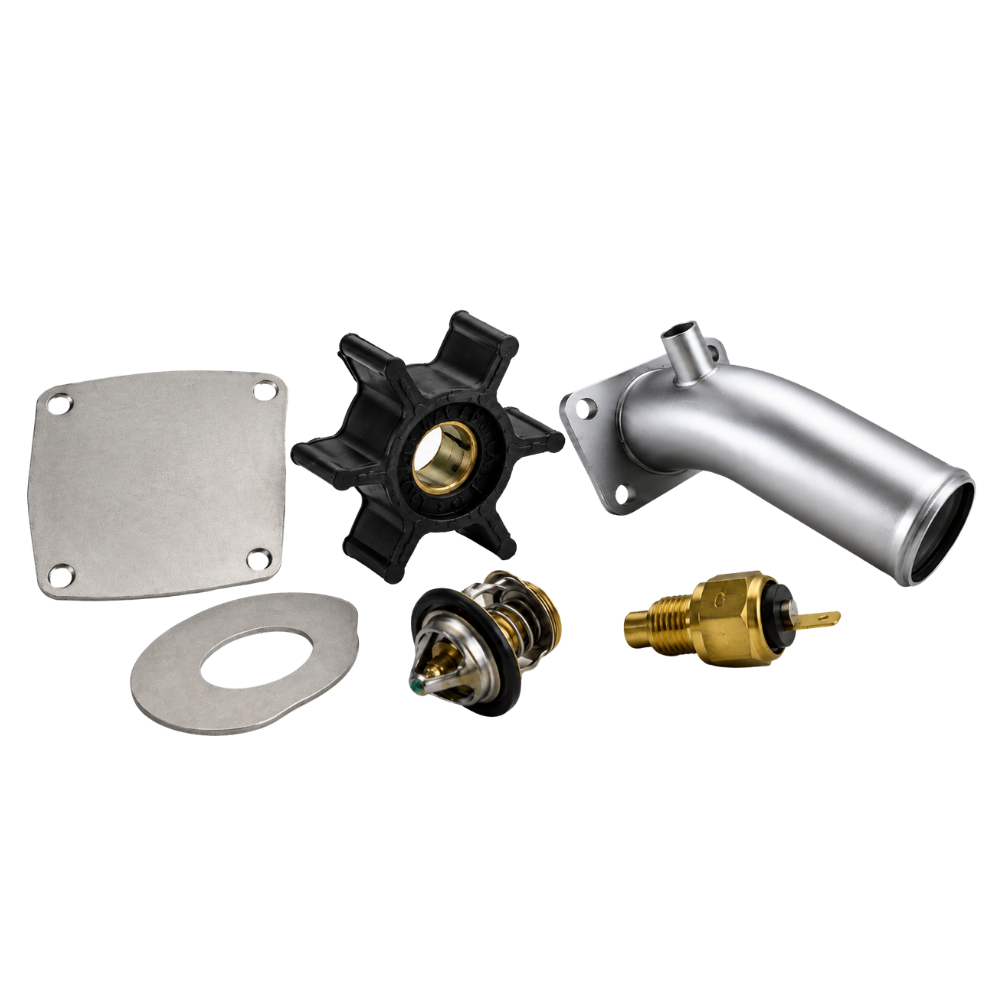
When a boat engine starts running hot, the problem is often related to cooling water flow. Before assuming the engine has a serious internal problem, start with the basic checks: seawater flow, impeller condition, pump wear, blocked filters, thermostat issues, coolant level, temperature sensors and the exhaust elbow.
An overheating marine diesel engine should always be taken seriously. Running the engine too hot can damage the head gasket, exhaust hose, impeller, seals and other engine parts. The good news is that many overheating problems are caused by service parts that can be checked and replaced without removing the engine.
This guide is useful for many common boat engines, including Volvo Penta, Yanmar, Vetus, Perkins, Nanni, Bukh and Solé Diesel.
If the temperature alarm goes off or the engine is clearly overheating, reduce load and stop the engine as soon as it is safe. Do not keep running the engine while hoping the temperature will drop.
First Check: Is Cooling Water Coming Out of the Exhaust?
The first thing to check is the water coming out of the exhaust. On most marine diesel engines with a wet exhaust system, seawater is pumped through the cooling system and then leaves through the exhaust.
If there is little or no water coming out, the problem is usually on the seawater side of the cooling system. That means you should start with the seacock, seawater strainer, hoses, impeller and seawater pump.
1. Check the Seacock and Water Intake
Start with the simple things. Make sure the seawater seacock is fully open. It sounds obvious, but after winter service or maintenance it is easy to forget.
Also check if the water intake under the boat is blocked. Plastic, weed, shells or dirt can restrict the water flow. If the engine overheats shortly after leaving the marina, a blocked intake is one of the first things to think about.
What to check:
Seacock open, intake not blocked, hose not collapsed, no air leak before the seawater pump.
2. Check the Seawater Strainer
The seawater strainer catches weed, dirt and small debris before it reaches the engine. If the strainer is full, the seawater pump cannot get enough water and the engine can overheat.
Open the strainer, clean the basket and check the rubber seal. If the lid does not seal properly, the pump can suck air instead of water. That can also cause poor cooling water flow.
3. Inspect the Impeller
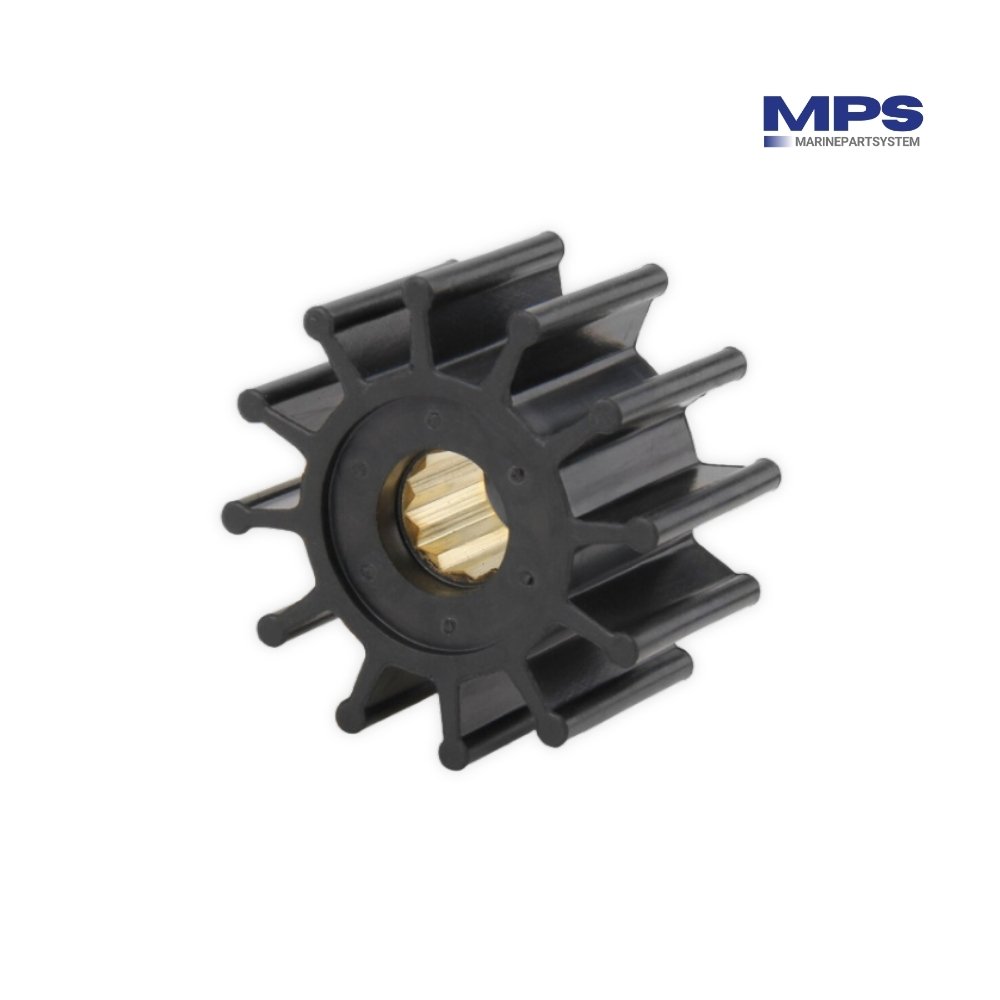
A damaged or worn impeller is one of the most common causes of overheating.
The impeller is one of the first parts to inspect when a boat engine overheats. It pumps seawater through the cooling system. If the rubber blades are cracked, stiff, damaged or missing, the pump will not move enough water.
Even if the impeller still looks complete, old rubber can become hard and lose flexibility. That reduces pumping performance, especially at low RPM or after the engine has been standing for a long time.
If blades are missing, do not only fit a new impeller. Try to find the broken pieces. They can travel further into the cooling system and block the heat exchanger or hoses.
4. Check the Impeller Pump Wear Plate and Cover
A new impeller does not always solve the problem. If the pump cover or wear plate is grooved, the impeller may not seal properly inside the pump. That can reduce suction and cooling water flow.
This is often forgotten during normal service. Boat owners replace the impeller, but the pump still performs badly because the wear surface is damaged.
What to look for:
Grooves, scoring, corrosion, worn pump cover, damaged gasket surface or signs that the impeller has been running dry.
5. Check the Hoses and Hose Clamps
Cooling hoses can become soft, cracked or restricted. A hose can also collapse internally, especially on the suction side before the seawater pump. This can reduce water flow even when the impeller is new.
Also check the hose clamps. A loose clamp can allow air into the system or cause a water leak. On the pressure side, a leak may be easier to see. On the suction side, the pump may suck air without leaving much water behind.
6. Check the Coolant Level
On engines with a closed cooling system, low or missing coolant can also cause overheating. This is separate from the seawater side. The seawater cools the heat exchanger, but the coolant circulates through the engine itself.
If the coolant level is too low, the engine cannot move heat away properly. This can happen because of a leak, a loose hose clamp, a damaged heat exchanger, a worn cap, air in the system or old maintenance problems.
What to check:
Coolant level, coolant leaks, hose connections, expansion tank, heat exchanger, pressure cap and signs of coolant in the bilge.
7. Check the Thermostat
If seawater flow looks good and the coolant level is correct, the next part to check is the thermostat. A thermostat that does not open correctly can cause the engine temperature to rise.
Thermostat problems can be difficult to diagnose by looking from the outside. If the engine overheats even though there is strong seawater flow from the exhaust, the thermostat is one of the possible causes.
Possible signs:
Engine warms up normally but then keeps climbing in temperature, or overheats even with good raw water flow.
8. Check the Temperature Sensor or Temperature Switch
Sometimes the engine is not actually overheating, but the temperature alarm still goes off. A bad temperature sensor, temperature switch, gauge sender or damaged wiring can send the wrong signal to the alarm or dashboard.
Do not ignore the alarm, but do not replace half the cooling system without checking the sensor side either. If the engine has good seawater flow, the coolant level is correct and the engine does not feel unusually hot, the temperature sensor or wiring may be the problem.
What to check:
Temperature sender, alarm switch, wiring connector, corrosion on terminals, dashboard gauge and whether the alarm matches the real engine temperature.
9. Check the Heat Exchanger and Cooling System Anodes
On many marine diesel engines, seawater passes through a heat exchanger. Over time, salt, scale, impeller pieces and corrosion can restrict the tubes inside the heat exchanger.
If your engine has cooling system anodes, they should also be checked. Old anodes can break down, and pieces can sometimes cause restrictions. If the anodes are gone or badly worn, corrosion inside the cooling system becomes more likely.
10. Check the Exhaust Elbow
The exhaust elbow is another common cause of overheating and poor engine performance. It mixes exhaust gases with cooling water before the water leaves through the exhaust system.
Inside the elbow, corrosion and carbon can build up over time. If the water injection point becomes restricted, the engine may have less cooling water flow through the exhaust. This can cause steam, high exhaust temperature and overheating.
Possible exhaust elbow symptoms:
Steam from the exhaust, reduced water flow, overheating under load, black smoke, poor performance or a very hot exhaust hose.
Quick Overheating Checklist
- Check water from the exhaust: weak flow points to a seawater flow problem.
- Check the seacock: make sure it is fully open.
- Clean the seawater strainer: check the basket and lid seal.
- Inspect the impeller: look for cracks, missing blades or hard rubber.
- Check the pump cover and wear plate: grooves can reduce pump performance.
- Inspect hoses and clamps: look for air leaks, collapsed hoses or loose clamps.
- Check the coolant level: low or missing coolant can cause overheating on closed cooling systems.
- Check the thermostat: especially if seawater flow is good.
- Check the temperature sensor: a faulty sensor or switch can cause a false overheating alarm.
- Inspect the heat exchanger: debris or scale can restrict cooling.
- Check the exhaust elbow: corrosion or blockage can restrict water flow.
Common Symptoms and Possible Causes
| Symptom | Possible Cause | Where to Start |
|---|---|---|
| No water from exhaust | Closed seacock, blocked intake or damaged impeller | Seacock, strainer, impeller |
| Weak water flow | Worn impeller, air leak or worn pump cover | Impeller pump and hoses |
| Temperature alarm but engine does not seem hot | Faulty temperature sensor, switch, gauge sender or wiring | Temperature sensor and wiring |
| Temperature keeps rising slowly | Low coolant, thermostat issue or restricted heat exchanger | Coolant level, thermostat and heat exchanger |
| Steam from exhaust | Poor water injection or restricted exhaust elbow | Exhaust elbow and seawater flow |
| Overheats under load | Restricted cooling, heat exchanger issue or exhaust elbow blockage | Heat exchanger and exhaust elbow |
| Coolant level keeps dropping | Coolant leak, cap problem, hose leak or heat exchanger issue | Coolant system and leak check |
Need parts for your cooling system?
MarinePartSystem supplies impellers, wear plates, gaskets, thermostats, temperature sensors, exhaust elbows and service parts for Volvo Penta, Yanmar, Vetus, Perkins, Nanni, Bukh, Solé Diesel and more.
After an Overheating Problem
After the engine has overheated, do not only replace the part that failed. It is also smart to check for secondary damage.
If the impeller ran dry, check the pump cover and wear plate. If impeller blades broke off, check the heat exchanger and hoses for pieces of rubber. If the exhaust hose became very hot, check that it has not softened or been damaged internally.
If the temperature alarm went off but the engine did not seem hot, check the temperature sensor and wiring before assuming the cooling system itself is blocked. If the coolant level was low, check carefully for leaks before using the engine again.
Need Help Finding the Right Part?
Every engine uses different cooling parts. A Volvo Penta D1 or D2 does not use the same impeller, thermostat, temperature sensor or gasket as a Yanmar 1GM10, Vetus engine, Perkins, Nanni or Solé Diesel.
Always check the engine model and part number before ordering. If you are not sure which part fits your engine, MarinePartSystem can help you find the correct impeller, wear plate, gasket, thermostat, temperature sensor or exhaust elbow.
Conclusion
When a boat engine overheats, start with the simple cooling water checks. Look at the water flow from the exhaust, clean the seawater strainer, inspect the impeller and check the seawater pump cover and wear plate.
If the seawater side is working properly, continue with the coolant level, thermostat, temperature sensor, heat exchanger, cooling system anodes and exhaust elbow. Finding the problem early can prevent expensive damage and keep your boat ready for the season.
MarinePartSystem supplies marine engine parts for Volvo Penta, Yanmar, Vetus, Perkins, Nanni, Bukh, Solé Diesel and more.
Leave a Reply